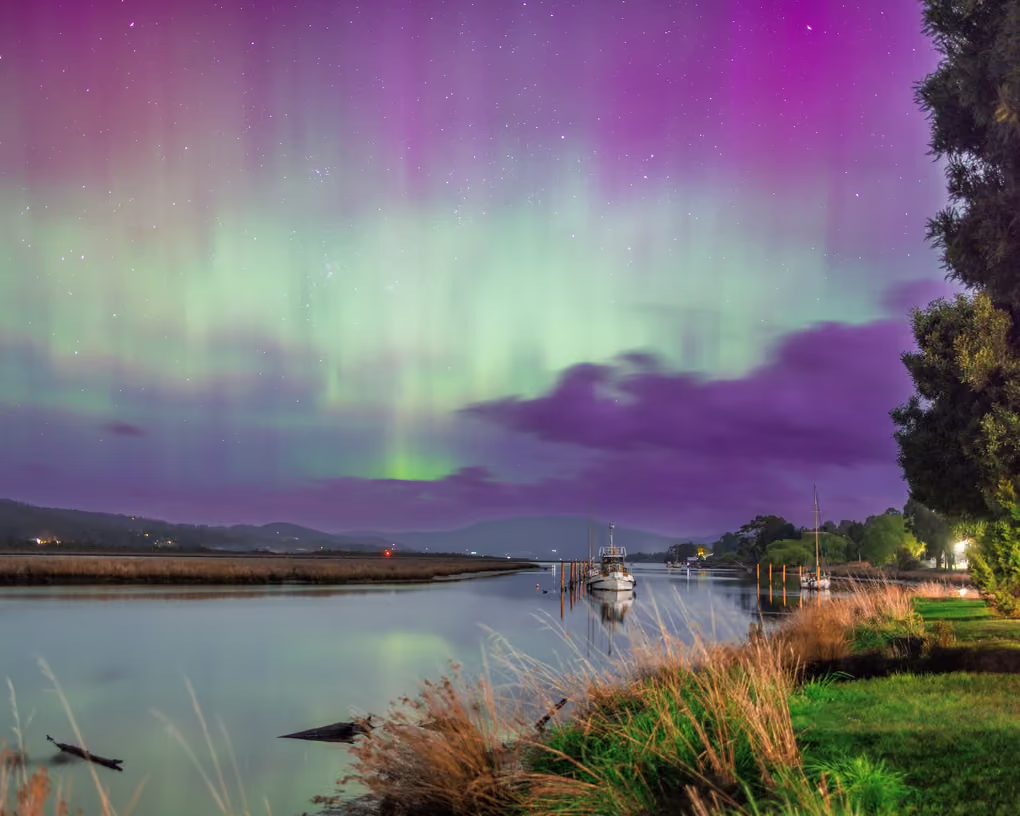
Scott spent 2020 building Boat Reflections, five small, self-contained accommodation units on the Huon River waterfront in Franklin, Tasmania.
When he opened, guests could only find Boat Reflections on Airbnb or by calling Scott or walking in. Airbnb gave the new business an online audience, but it was also the only recorded online booking source.
Scott approached me because he wanted more bookings from more places. He needed his own website, a direct online booking path and access to the other major accommodation channels without having to manage a collection of disconnected calendars.
We launched the new system in October 2025 and in the first matched eight months we can already see a 19% increase in stayed room nights.
I started with an owned website
I designed and built the Boat Reflections website with Astro. It is fast, works well on mobile and gives Scott an address on the internet that he controls. Plus he’s not updating his website every day, so a CMS-diven website like Squarespace, Wix, or Wordpress was overkill and a wasted expense.
The site explains the rooms, the riverfront location and the Huon Valley in a way an Airbnb listing cannot. Each page has all the useful metadata, canonical URLs and structured data that describes Boat Reflections as accommodation in Franklin. It also gives guests a clear route into the direct booking engine where Scott’s margins are going to be the best.
You can inspect the current site yourself with PageSpeed Insights, the Google Rich Results Test and the Schema.org validator.
The website gave us room to publish useful local guides to the area as well. Guests can learn about nearby food, walks and attractions before they arrive. There is even a guide to seeing the Southern Lights from the riverbank beside the property.
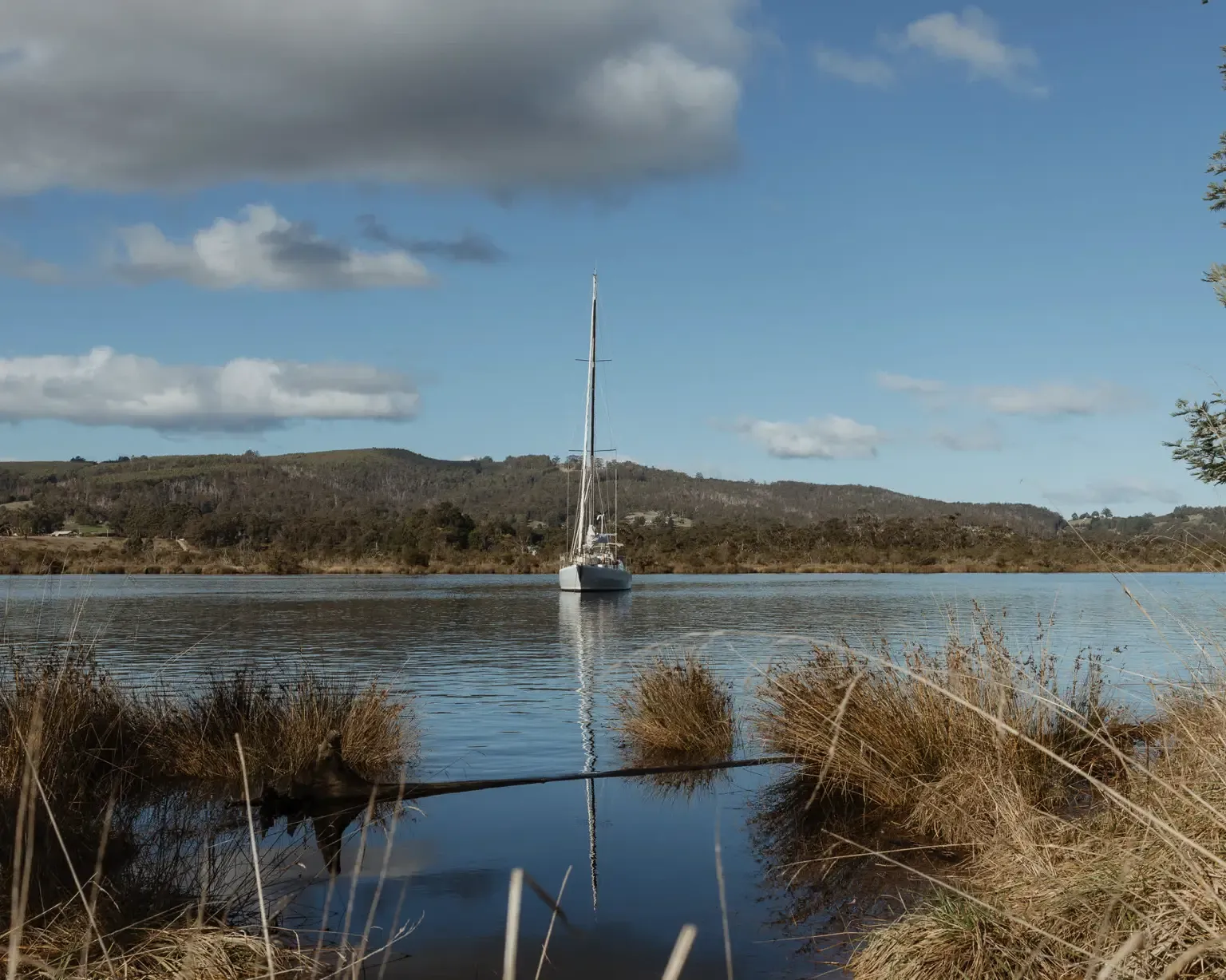
I photographed what Scott had built
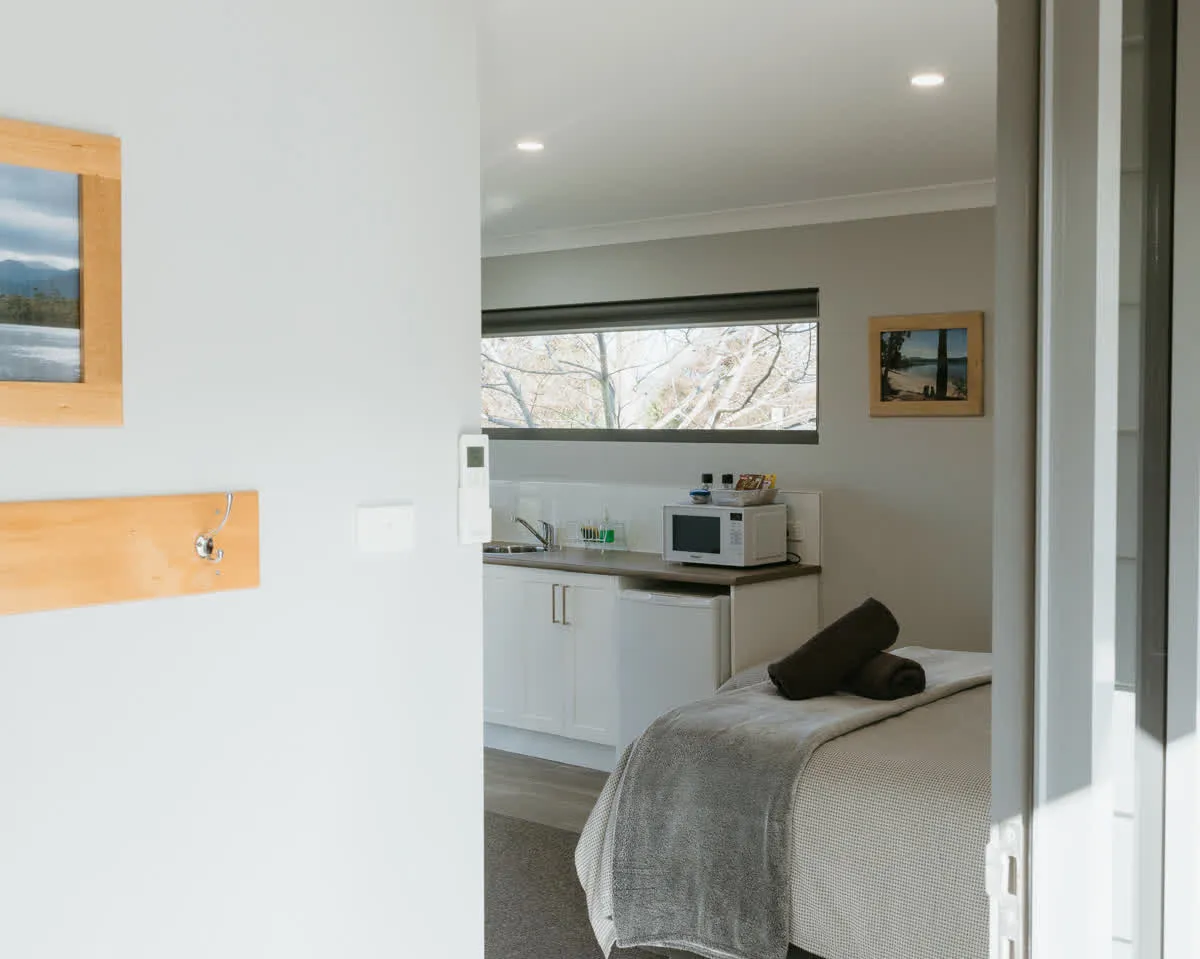
Accommodation is visual. The website and booking listings needed photographs that showed the rooms as they are, the property and the place guests would be visiting.
I photographed the self-contained units, details around the property and the Huon River foreshore. I also photographed the Aurora Australis from beside Boat Reflections. Franklin has a clear southern outlook across the water, and on the right night the colour reflects across the river.
Those photographs gave Scott a consistent image library for the website and his booking channels. Prospective guests could see the rooms, understand the setting and picture the stay before choosing where to book.
I connected the rooms to more booking channels
I set Boat Reflections up on Little Hotelier, SiteMinder’s platform for small accommodation businesses.
Little Hotelier connects the direct booking engine on Scott’s website with his existing Airbnb listings and the new Booking.com and Expedia Group distribution. Hotels.com sits within the Expedia network. Rates and availability can be managed in one place, and reservations return to the same calendar.
That connection makes wider distribution practical for a small property. Scott can keep Airbnb as a useful source while also taking website bookings and reaching guests who prefer booking through Google’s hotel booking engine, Booking.com, Expedia’s network including Hotels.com.
I also established the wider discovery layer around the booking system: Google Business Profile and Google Travel, TripAdvisor, Facebook and Instagram. Each gives a prospective guest another way to find Boat Reflections, check that it is right for them and choose how to make contact.
The matched result: stayed room nights grew 19%
The cleanest comparison uses the same period on both sides of the launch:
- before: 1 October 2024 to 31 May 2025;
- after: 1 October 2025 to 31 May 2026.
| Recorded stay metric | Change |
|---|---|
| Reservations | +6.6% |
| Stayed room nights | +19.0% |
| Comparable average stay | +11.6% |
Stayed room nights grew faster than reservation count because the average recorded stay became longer as well. The 19% growth in recorded stayed room nights is the strongest before-and-after measure because both periods cover the same dates and use equivalent recorded stays.
That longer average stay matters in Franklin. It is a small town in the Huon Valley, a small region that many visitors include as a one-night stop on a wider trip around Tasmania. To me, the 11.6% increase in average stay is a testament to the brand work: more guests are choosing Boat Reflections as their base while they spend time in the Huon Valley.
The website became a substantial booking source
The booked-on-date report shows where reservations made during the after period came from. Some of those bookings were for stays outside the period, so I have kept these channel shares separate from the stayed-room-night comparison above.
| Booking channel | Share of recorded room nights booked |
|---|---|
| Website direct | 35.0% |
| Booking.com | 40% |
| Airbnb | 20.8% |
| Expedia | 5.1% |
Website direct accounted for 29.9% of recorded reservations and 35% of recorded room nights booked during the period.
The three online routes added after the Airbnb-only baseline, website direct, Booking.com and Expedia, accounted for 76.7% of recorded room nights booked. Across all recorded channels, 79.2% of booked room nights came from somewhere other than Airbnb.
That is the diversification Scott asked me to create. Airbnb remains part of the business, but guests now have several ways to discover and book Boat Reflections.
Scott’s direct business is bigger than the website
Scott still takes bookings over the phone, from people who walk in, from wedding guests and through personal relationships and most of these people still find the property through the website but as is the Tasmanian tradition they prefer to call to lock it in. Website direct and offline direct together made up 66.6% of known room-night use after launch. Airbnb accounted for 15.8%, while all non-Airbnb sources together accounted for 84.2%.
Google gave the business a new source of discovery
Boat Reflections had no owned search presence when Airbnb was its only recorded online channel. During the matched after period, monthly organic search impressions grew 160.4% from October to May. Monthly organic clicks grew 61.8%, and the site recorded an overall organic click-through rate of 1.4%.
Google Analytics recorded a 90.7% engaged-session rate. In the complete Google Business Profile action data available for the period, 67.8% of actions were direction requests, 27% were website clicks and 5.2% were phone calls.
Those figures show discovery and intent rather than attributed stays. A direction request might come from a guest who has already booked. A call might turn into an offline booking. Little Hotelier remains the source of truth for bookings, while Google shows that people are finding and acting on the new presence.
These are early search results as well. Google says that some site improvements can take several months to affect Search, and its AI search features use the same SEO foundations as traditional results.
In my own work, I allow about 12 months before judging the full effect of a new website’s SEO and AEO. Search and answer engines need time to crawl, index and reassess the site. This measurement stops eight months after launch, so these figures capture the result before I expect the work to have had its full algorithmic effect.
A better business, built around Scott’s property
Scott built the rooms and looks after the guests. My work gave his business an owned website, fresh photography, direct online booking and distribution beyond Airbnb, with Little Hotelier keeping the channels connected.
Well into its first year, the result is 19% growth in recorded stayed room nights, a direct website responsible for 35% of recorded room nights booked, and 79.2% of recorded booked room nights coming from non-Airbnb sources.
That is a really successful website project to me. The design is fast and beautiful, but its value is easier to see in the way Scott’s business now works and where his bookings come from.
Visit Boat Reflections and see what Scott has built on the Huon River.